![TITLE [Metallic] light lilac_edited.png](https://static.wixstatic.com/media/648860_537f899a441c402997b2d650dc1eee70~mv2.png/v1/fill/w_123,h_22,al_c,q_85,usm_0.66_1.00_0.01,enc_avif,quality_auto/TITLE%20%5BMetallic%5D%20light%20lilac_edited.png)

Our favourite BIPOC and Queer designers at LFW
- Feb 27
- 5 min read
Written by: Lucy Dover (@lucy_dover_)
London Fashion Week isn’t defined by one venue, one schedule or one tier of designer. This season, the strongest ideas came from a mix of established names and emerging labels, many led by BIPOC and queer creatives. Across the runways and presentations, these shows treated clothing as something lived in and tied to identity and community.
Belsize25
Featured on Flair Fashion’s platform, Belsize25 showcased a collection full of high glamour and embellishment. Titled Whisky Kiss in the Old City, and inspired by amber whisky, crystal glasses and shimmering light, the garments would not look out of place on a yacht in the French Riviera. It is impossible to capture on film just how beautifully the fabrics refracted the light.
Sheer lace, liquid satin and beaded mesh dominated the runway, often layered so the body became part of the garment rather than something hidden beneath it. Slip silhouettes, corsetry and draped metallics gave the collection a late-night quality, closer to evening interiors than daytime fashion. Even the softer ivory looks felt designed for candlelight.
The brand’s philosophy, adapted from a Chinese proverb, is “The greater retreat lies not in the forest, but in the city.” The collection reflects that idea: escapism not through nature, but through opulence, dressing as a form of withdrawal into atmosphere, glamour and controlled fantasy.


Images courtesy of Flair Fashion
Tolu Coker
Tolu Coker’s AW26 show, Survivor’s Remorse, transformed the brutalist language of inner-city London into something intimate. Fencing, concrete textures and a mural by Neequaye Dreph Dsane, drawn from photographs in her late father’s archive, framed a space that felt closer to memory than set design. The show was her most personal to date as she reframed childhood as something to carry forward, not escape from.
The collection opened with a live performance from Little Simz, who crossed the stage mid-song to hand a seated model a copy of All About Love by Bell Hooks before the first look appeared.
As a Black British designer, Coker anchored the collection in tailoring. Corseted jackets with relaxed shoulders, pleated skirts and hooded silhouettes sat alongside British wool and tartan, layered with Yoruba colour references to explore dual identity without reducing it to symbolism. Upcycled leather, deadstock denim and reclaimed satin made sustainability structural rather than promotional.


Images courtesy of Tolu Coker on Instagram
Twin by Tare
As part of the UDGN x Fashion Scout showcase, Twin by Tare’s ASIN KAI MI (In My Blood) collection looked to Ijaw wedding traditions and how clothing marks family and union. Working from old family photographs, the collection didn’t copy ceremonial dress so much as reinterpret it, bringing those garments into a contemporary wardrobe.
The George Wrapper, a fabric traditionally passed down through generations, sat at the centre of the collection. It appeared in structured jackets, sculpted mini dresses and draped skirts, combined with hand beading, layering and clean tailoring. Velvet evening pieces, sharp black looks and softer veiled gowns gave the show range without losing its focus.
The standout was a red beaded mini dress, densely embellished yet simple in shape. It held the presence of ceremonial clothing while still reading as eveningwear.


Images courtesy of Fashion Scout
Raw Mango
Indian label Raw Mango made its London Fashion Week debut with It’s Not About the Flower, a collection built around the cultural meaning of the floral garland. Rather than treating it as decoration, the show explored how an object tied to ceremony, welcome and ritual can shape clothing itself.
Founded by textile designer Sanjay Garg in 2008, the brand works closely with artisans across India, and that focus on craft was visible immediately. Hand-assembled, silk-like fabrics formed sculptural collars, trailing textures and thick garland trims that wrapped around shoulders, necklines and hems. Some pieces suggested jewellery, others almost armour, sitting between garment and ornament.
Tailoring stayed restrained: black trousers, simple shirts and long coats grounded the more elaborate construction. The contrast kept the collection wearable without losing its point. The garland appeared again and again, sometimes delicate, sometimes heavy, but always structural.


Images courtesy of WWD and Raw Mango
Simone Rocha
Simone Rocha’s AW26 show balanced delicacy with something rougher underneath. Shown in a derelict theatre at Alexandra Palace, the runway folded her Adidas collaboration into the main collection rather than presenting it separately.
Adidas track jackets, gym knickers and logo socks were layered under lace dresses, ribboned skirts and floral tailoring. The styling felt intentionally off: zip-ups with sheer fabric, frilled track trousers and ballet flats worn like trainers. Instead of gimmick, the sportswear grounded the clothes and stopped the femininity becoming overly sweet. Shearling-collared coats and embroidered tailoring sat beside soft white dresses and bow-covered closing looks. References to youth culture and folklore were present but understated, carried more through mood than costume.
The contrast between practicality and decoration gave the collection its shape, keeping Rocha’s romanticism from drifting into nostalgia.


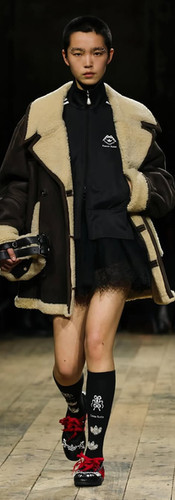


Images courtesy of Simone Rocha on Instagram
Yaku
YAKU’s AW26 presentation was staged more as performance than runway. Performers moved through training and combat sequences, framing the collection as part of an imagined RPG-like family narrative rather than a standard show.
Distressed cargos, layered hoodies and tactical jackets formed the base, often pushed into exaggerated proportions. Protective padding, masks and oversized footwear gave silhouettes weight, while shields, arrows and armour elements pushed some looks fully into fantasy. A collaboration with Nike appeared within the collection, reworked sneakers and sportswear integrated into the same world rather than separated as a capsule.
Other pieces sat closer to streetwear: worn knits, polos and workwear shapes that felt practical once removed from the staging.


Images courtesy of YAKU
Grete Henriette
Grete Henriette’s Hysteria in Tartarus unfolded as a slow procession rather than a runway. Models moved through the audience around a hanging, wax-like sculpture and candles, turning the space into something closer to a ritual.
Following her debut Elysium, the collection leaned darker. Henriette drew on the history of “female hysteria”, treating it less as reference than structure. Corsetry, rigid leather, metal hardware and waxed fabrics suggested both medical restraint and armour. Jewellery and clothing blurred together, with chains and fastenings holding garments in place as much as decorating them.
The queerness of the casting and interaction mattered: models embraced, kissed, lingered and held eye contact, shifting the mood from spectacle to intimacy. What could have read as punishment instead felt reclaimed. Speaking of casting, the incredible work of the co-casting directors Rachelle Cox and Jadzia Scott should be acknowledged. In an industry still unfortunately dominated by white, extremely thin, able bodied models, seeing such diversity on the runway was extremely refreshing.
Handmade in Hackney, the pieces translated heavy ideas into wearable forms.


Images courtesy of Grete Henriette
Chet Lo
Chet Lo turned his runway into a Hong Kong night market, staging the show among food stalls and carts you could actually shop from. Guests arrived to drinks on their seats and artisans working behind counters, shifting the mood from fashion presentation to social space before the first look even appeared.
Lo’s signature spikes are now a recognisable house code, but this season they felt refined. Spiked merino knits, sheer dresses and sharp tailoring moved between playful and sensual rather than purely experimental. Parasols, feathered headpieces and glossy black looks leaned into drama without losing wearability.
The setting mattered. Instead of using cultural reference as backdrop, Lo built an environment of community and familiarity, and the clothes followed. The collection kept his texture-heavy identity but softened it, showing a designer moving past novelty into confidence.



Images courtesy of Chet Lo on Instagram


Comments